Diet Guide
Health bloggers have overwhelmed us with diet recommendations, each with its own name, and each claimed to be the only effective one, to the point that the line between a “healthy plate” and a therapeutic diet has completely blurred in our minds.
It is important to clearly distinguish: when we are supporting our resources, and when we are using food as a powerful metabolic tool.
This course does not claim to be an encyclopedia of dietetics. I present here only those diets relevant to my patients – people suffering from chronic pain.
Let’s consider the stages of nutritional intervention:
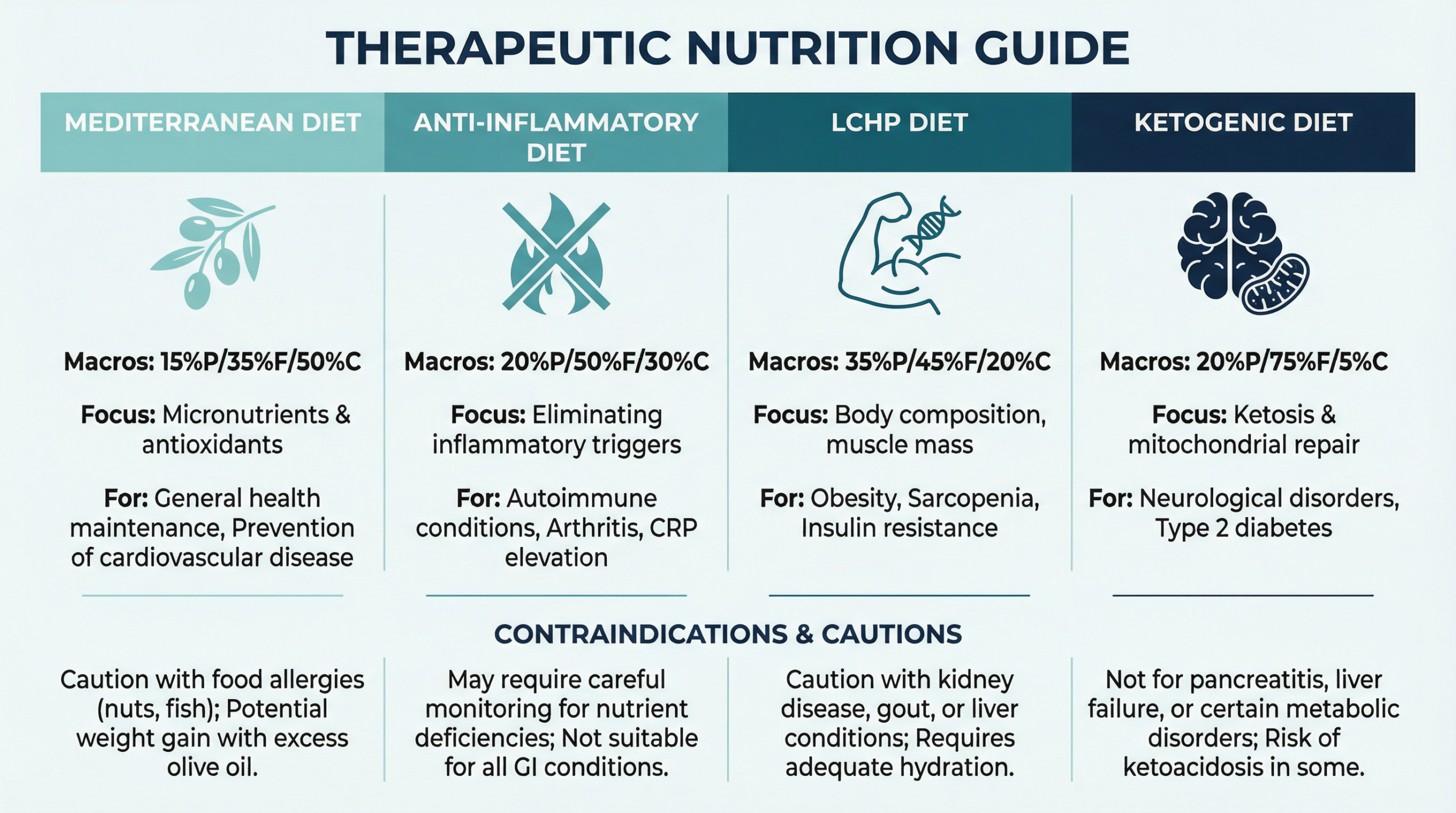
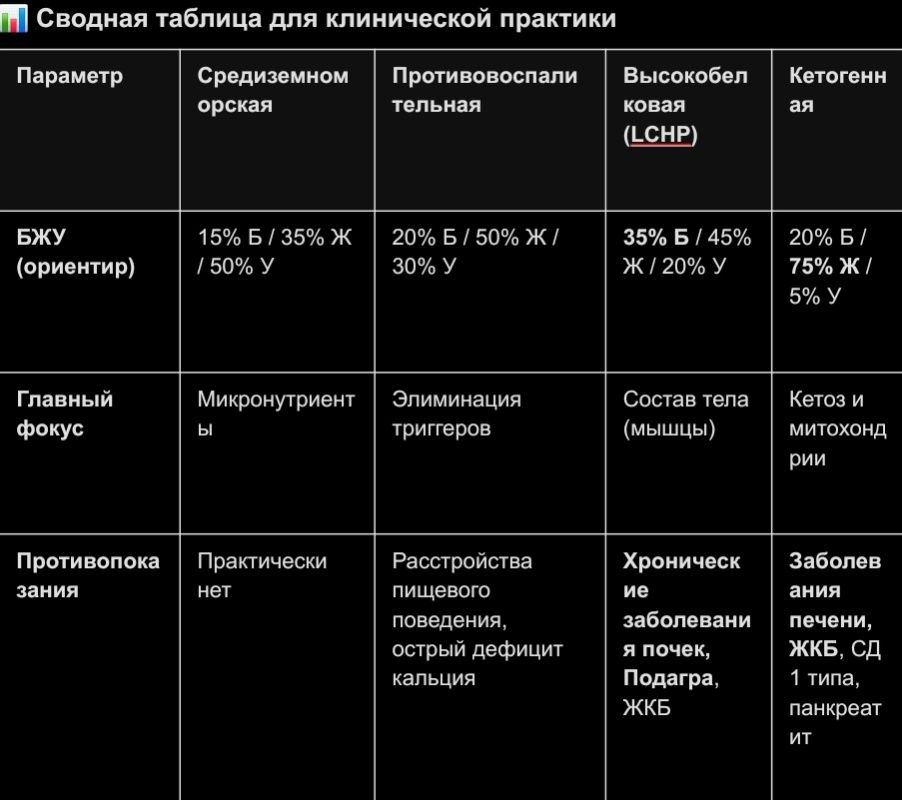
- Mediterranean Diet: The Gold Standard of Prevention
This is the foundation for a healthy person. It’s not about restrictions, but about balance and longevity.
Goal: Maintaining cognitive function, preventing cardiovascular disease (CVD) and metabolic syndrome.
Focus: High content of omega-3, polyphenols, fiber. Minimal food processing.
Who: All generally healthy individuals to preserve physical and mental vitality for decades.
- Anti-Inflammatory Protocol
When we detect systemic inflammation (high-sensitivity CRP), we move to a stricter selection of foods. Here we deliberately eliminate triggers.
Goal: Reducing oxidative stress and suppressing systemic inflammation.
Indications: Autoimmune diseases (Hashimoto’s thyroiditis, rheumatoid arthritis), insulin resistance, chronic skin conditions, chronic fatigue syndrome.
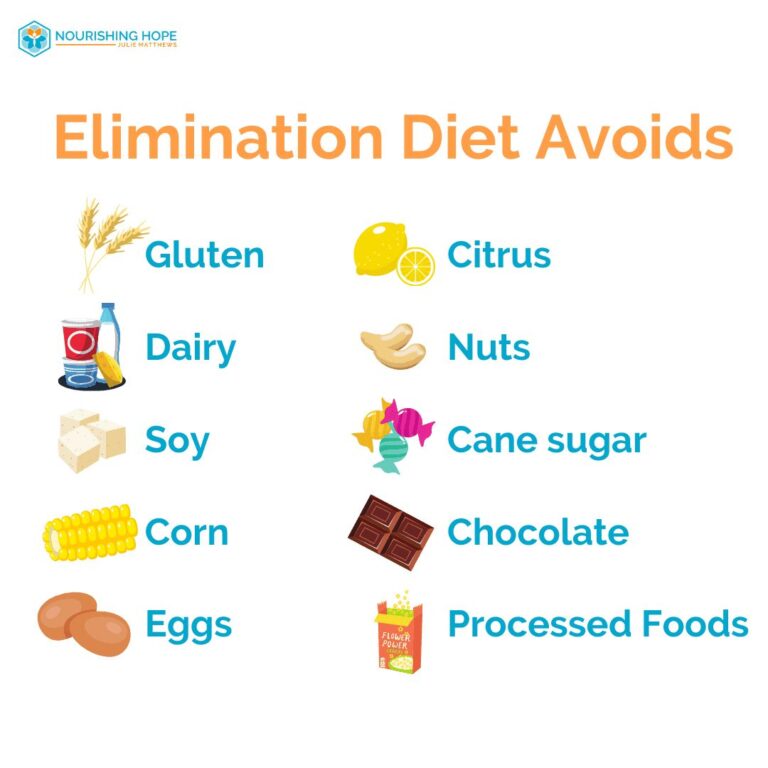
Restrictions: Elimination of refined sugars, trans fats, often nightshades and gluten.
- High-Protein Low-Carbohydrate Diet (LCHP): Metabolic Correction
An intermediate step for those needing structural body remodeling without deep ketosis.
Goal: Preserving muscle mass (anti-sarcopenia) and active fat burning.
Indications: Obesity, age-related muscle loss, recovery after injuries, insulin resistance.
Note: Requires careful monitoring of kidney function.
- Ketogenic Diet: Metabolic Surgery
The strictest and most therapeutically aggressive protocol. This is not just a “diet,” but a shift of the body to a different fuel source. Requires mandatory medical supervision.
Goal: Deep neuroprotection and correction of mitochondrial dysfunction.
Indications: Neurological disorders (epilepsy, Alzheimer’s disease, Parkinson’s disease, ADHD), type 2 diabetes, obesity.
Challenge: Requires strict adherence to macronutrient ratios and electrolyte balance monitoring.
The choice of protocol should be proportional to the individual’s condition. If a Mediterranean-style diet is sufficient to support brain health, then in degenerative processes or pronounced inflammation, we may need a strong “therapeutic lever” such as Keto or LCHP.
Remember: the more powerful the tool, the higher the risk of side effects if used improperly.
In upcoming posts, we will explore each type of nutrition in detail.
Low FODMAP: When “healthy food” causes pain. A rescue for the gut in bloating and IBS.