The Dead Sea
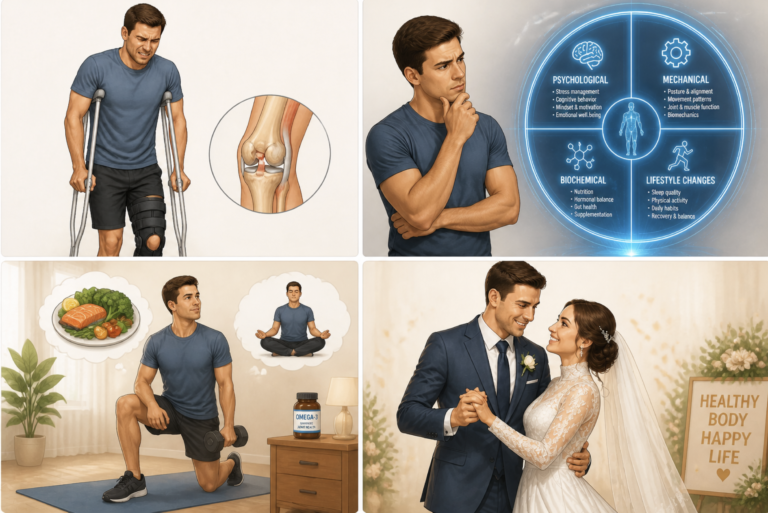
Four mechanisms of therapeutic action
Spa medicine · pain treatment
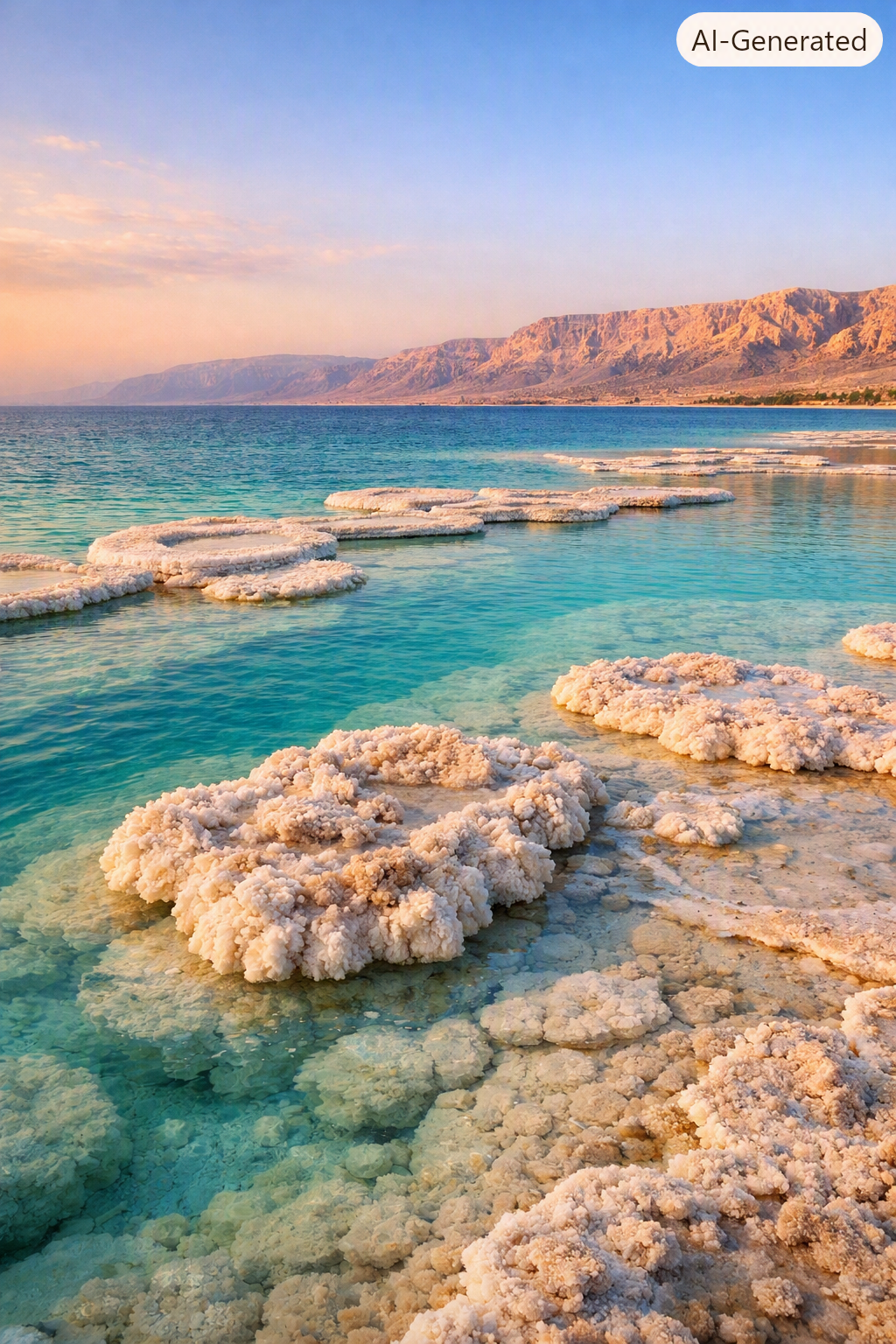
The Dead Sea
Four mechanisms of therapeutic action
The surface of the Dead Sea lies roughly 440 metres below ocean level, the lowest dry land on the planet. The town of Arad stands 25 kilometres to the west, at about 600 metres above sea level. Between them lie a thousand metres of descent and forty minutes of road.
A long time ago I was the first to set out the rationale for the Arad – Dead Sea resort complex, explaining that from the point of view of proper treatment it is better to stay up above, in Arad, in a hypoallergenic zone with dry mountain air, and to come down to the Dead Sea for a few hours a day for procedures. In this article I want to describe the particular qualities of the Dead Sea from the perspective of a chronic pain specialist.
You will remember that I approach pain from four sides: psychosomatics, biochemistry, biomechanics and lifestyle. All four are engaged in treatment at the Dead Sea.
Psychosomatics: physical and biochemical relaxation
Our body fights gravity around the clock. This is the work of the so-called antigravity muscles: the back extensors, the gluteals, the calf muscles, the deep muscles of the neck. They do not rest even in sleep, because lying down also requires tone. In a person with chronic pain this tone is usually raised, and on top of it sits the protective tension around the painful joint.
In Dead Sea water, with its density of 1.24 kg/l against a body density of about 1.01, the fight is over. The body is pushed out entirely, there is no need to hold a posture, and instead you have to learn not to float up. The postural muscles get something they have not had for years: a complete holiday. For the first twenty seconds on their back most people are still holding on, and then they let go, and you can see it from the outside: the line of the neck changes, the shoulders drop, the face loses its tension.
The Dead Sea holds the highest bromide concentration of any surface water body on Earth, in the order of 4-6 grams per litre. Bromine was used in medicine as a sedative for more than a century, and it is known that after four weeks of bathing the serum bromide level can rise several fold.
Magnesium in this water runs at 35-46 g/l, about forty times more than in the ocean. Magnesium takes part in the work of hundreds of enzyme systems, regulates neuromuscular transmission and neuronal excitability. Part of it penetrates the skin, mainly through the ducts of the sweat glands and the hair follicles, bypassing the stratum corneum.
The Dead Sea basin has the highest barometric pressure on the planet, about 800 mm Hg, and the partial pressure of oxygen is roughly 5 percent higher than at sea level. People describe this as breathing more easily, and in this case the sensation has a physical basis.
Biochemistry
The salinity of the Dead Sea is about 340 grams per litre against 35 in the ocean, roughly ten times higher. But the ratio of salts is fundamentally different. In the ocean up to 90 percent of the dissolved matter is sodium chloride, ordinary table salt. In the Dead Sea the picture is different: about half is magnesium chloride, a third sodium chloride, about 14 percent calcium chloride, and the rest is potassium, bromides and dozens of trace elements, among them zinc, strontium, boron, lithium and iodine.
There is forty times more magnesium here than in the ocean, and forty-five times more calcium. It is this ratio, not the absolute salinity, that sets the Dead Sea apart from any other salt lake.
Anti-inflammatory effect
Studies of Dead Sea balneotherapy have shown reduced production of pro-inflammatory cytokines: interleukin-2, interferon gamma, tumour necrosis factor alpha and interleukin-1.
Skin
Magnesium improves the barrier function of the skin and reduces transepidermal water loss, as shown in controlled studies in patients with atopic dry skin. In psoriasis, climatotherapy at the Dead Sea produces marked improvement or complete clearing of the skin in 70-88 percent of patients according to several observational series. Israel pays for a four-week course for its citizens with psoriasis, and the insurance systems of Germany, Austria, Denmark, Norway and part of Italy subsidise trips for their patients. In my view this is the most telling indicator of effectiveness: insurers do not pay for impressions.
Psoriasis · climatotherapy
70-88 % of patients achieve marked improvement or complete clearing of the skin
Joints
Meta-analyses of balneotherapy show a significant reduction in pain in chronic low back pain, knee osteoarthritis and fibromyalgia compared with controls. In randomised trials at the Dead Sea, improvement on the Lequesne index in knee osteoarthritis persisted for up to three months after the course.
Sun
Sunlight here passes through an additional four hundred metres of atmosphere, and evaporation above the water creates a constant haze. As a result short-wave ultraviolet B, the one that causes burns, is filtered out more strongly than ultraviolet A. What you get is natural selective phototherapy: you can stay in the sun longer without burning, while the therapeutic wavelengths are preserved. This does not cancel common sense and protection, but it explains why sun exposure is dosed differently here than on the Mediterranean.
Biomechanics
The human body has a density of about 1.01 kg/l. In fresh water with a density of 1.0 it sits in almost neutral buoyancy: it floats on inhalation and sinks on exhalation. Dead Sea water has a density of 1.24. The difference looks small, but by Archimedes’ law it means that the buoyant force exceeds body weight by about a quarter, regardless of the phase of breathing, the amount of fat tissue or the ability to swim.
This gives the following:
Complete unloading of the axial skeleton. The spine, the hip and knee joints stop carrying weight. Conditions approach weightlessness, and this allows the joint to move through a range that is unavailable on land because of pain.
Viscosity. Because of the enormous amount of dissolved salts the water takes on a characteristic oily, almost glycerine-like consistency. It is thicker than fresh water, and this changes the mechanics of movement: any movement meets even resistance in all directions. The muscle works concentrically and hardly works eccentrically, that is, in the mode that produces microdamage and next-day soreness. A sharp movement is simply not physically possible, the medium damps it. There is no impact loading at all.
Water as a stretching assistant. If in a swimming pool you take your leg out to the side and hold it there, the gluteus medius is working, which means you are stretching the adductors and tensing the abductors at the same time. In the Dead Sea the water itself lifts and holds the leg. The muscles around the joint are switched off completely, and the stretch is passive, without resistance. For shortened, spasmed muscles this is a fundamentally different mode of work.
The other side of the same physics: stability is disturbed. You have to learn to stand on your feet in the Dead Sea all over again, the body is pushed up and turned around. Moving from lying on your back to upright is done differently than in a pool: you need to draw your knees to your stomach and then push your legs down. The motor stereotype breaks down, and incidentally this very relearning trains postural control and the vestibular system.
Lifestyle
Most of my patients arrive with the inner conviction that rest has to be earned and that treatment is a kind of work, preferably hard work. They ask how many times a day they should go into the sea, whether they can add more load, whether the programme could be made denser.
Meanwhile tissue recovery is an active biological process, and it requires a resource. That resource comes from rest. Lowered sympathetic tone, normal sleep, no need to hold a posture and hold a face, none of this is doing nothing, it is the condition under which the other three mechanisms work. The anti-inflammatory effect of the minerals against a background of chronic stress and lack of sleep is partly eaten up by that same stress.
The layout of the Arad – Dead Sea resort is, in my view, built around exactly this principle. Down below, by the water, the procedures take place: bathing, mud, sun, exercises. Up above, in Arad, at six hundred metres, recovery takes place: dry air almost free of allergens, cool nights, quiet, no resort bustle. A thousand metres of descent work as a physiological change of regime, not merely a change of scenery.
How long the course lasts
But even one or two days at the Dead Sea give the nervous system a good reset and the musculoskeletal system a short breather.
Method
Exercises in the water of the Dead Sea
The programme set out below was developed by me for the spa treatment of musculoskeletal conditions and was used for many years in my private clinic, which was then in Arad. It is built to use all three physical properties of this water: buoyancy, viscosity and the ability to hold a limb in a stretched position.
Safety rules
This is not a formality. The Dead Sea punishes improvisation quickly.
- The water is supersaturated with salts. Protect the mucous membranes, especially the eyes. If water gets in, rinse immediately with fresh water.
- No sharp movements when entering the water. The buoyant force is high, and staying on your feet is harder than it looks.
- Devote the first entry to learning: stay on your feet, lie on your back, turn from back to front and back again, get up from lying (knees to the stomach, then push the legs down).
- A U-shaped rubber pillow under the neck is desirable.
- Do not lie on your stomach for long. It produces hyperextension of the lower back and the shoulder joints, precisely what people usually come to be treated for.
- No more than 30 minutes in the water at a stretch. Then come out, take a fresh-water shower and rest on the shore for at least 30 minutes. There can be several entries, but the break is compulsory.
- After bathing, a warm fresh-water shower, then oil or an emollient cream on the skin.
- All instructions from your treating physician take priority over this list.
Adaptation and entering relaxation
1. Lying on your back on the water, pillow under the neck, arms out to the sides. Relax for 20-30 seconds.
Axial extension and flexion
2. Same starting position. On the count of 1-2 arms up, stretch through the whole body on the inhalation. On the exhalation, on the count of 3-4, curl up, hug the knees with the arms, draw the head towards the knees. Repeat 6 times.
Diagonals and rotation
3. Take the left leg across the right, on the exhalation reach to the left with the arms. 6 times.
4. The same starting with the right leg, reaching to the right with the arms. 6 times.
Shoulder girdle
5. Lying on your back, make circular movements in the shoulder joints, as in backstroke.
Hips and knees, lying position
6. Lying on your back, take the legs as far apart as possible, hold for 5 breathing cycles (one breathing cycle = inhalation + exhalation), return to the starting position.
7. Bend the legs at the knees, straighten them. 6 times.
Upright position in deep water
8. Upright in water deep enough that the feet do not reach the bottom. Make stepping movements.
9. On the exhalation draw the legs up to the stomach, on the inhalation return to the starting position. 6 times.
10. Straighten the legs as far as possible, pull them downwards.
11. Arms out to the sides, relax for 20-30 seconds.
At the handrail, waist-deep water
12. Hold the handrail with the left hand. Bend the right leg at a right angle at the hip and the knee. Take hold of your right knee with your right hand and make circular movements with the leg, from front to back. 6 times.
13. The same holding on with the right hand, with the left leg.
14. Lift the leg out to the side and let the water stretch the legs at the hip joints. Hold for 5 breathing cycles (one breathing cycle = inhalation + exhalation).
15. The same with the other leg.
16. The same, but with the leg stretched forwards, additionally reaching with the free hand towards the toes.
17. Take hold of the right ankle with the right hand so that the elbow is in front of the knee, and draw the leg towards you. Make rocking movements with the leg, up and down. 6 times.
18. The same with the left leg.
19. Take hold of the right ankle with the right hand behind your back. Make rocking movements with the leg, up and down. 6 times.
20. The same with the left leg.
Coming out
21. Repeat exercise 1: lying on your back, arms out to the sides, relax for 20-30 seconds.
This programme works in any water. But not in the same way
Everything described above can be done in a swimming pool or an ordinary sea. The programme is not tied to the Dead Sea, it is tied to water as a medium. If you have no opportunity to come to Israel, work in a pool, it will do you good.
But there is a difference.
A swimming pool is a good instrument: accessible, safe and flexible. The Dead Sea is the same instrument, amplified several times over on every physical parameter and supplemented by biochemistry, but with a strict protocol and a short session time.
References
- Dead Sea. Wikipedia (level and geography data). en.wikipedia.org/wiki/Dead_Sea
- Kudish A.I., Abels D., Harari M. Ultraviolet radiation properties as applied to photoclimatherapy at the Dead Sea. Int J Dermatol. 2003;42(5):359-365. PMID: 12755972. pubmed.ncbi.nlm.nih.gov/12755972
- Emmanuel T. et al. Climatotherapy at the Dead Sea for psoriasis is a highly effective anti-inflammatory treatment in the short term: An immunohistochemical study. Exp Dermatol. 2022;31(8):1136-1144.
- Proksch E. et al. Bathing in a magnesium-rich Dead Sea salt solution improves skin barrier function. Int J Dermatol. 2005;44(2):151-157. pubmed.ncbi.nlm.nih.gov/15689218
- Shani J. et al. Skin penetration of minerals in psoriatics and guinea-pigs bathing in hypertonic salt solutions. Pharmacol Res Commun. 1985. pubmed.ncbi.nlm.nih.gov/4059351
- Sukenik S. et al. Balneotherapy at the Dead Sea area for patients with knee osteoarthritis. Isr Med Assoc J. pubmed.ncbi.nlm.nih.gov/19323030
- Naumann J., Sadaghiani C. Therapeutic benefit of balneotherapy and hydrotherapy in the management of fibromyalgia syndrome: systematic review and meta-analysis of RCTs. Arthritis Res Ther. 2014;16(4):R141. ncbi.nlm.nih.gov/pmc/articles/PMC4227103
- Harari M. et al. Climatotherapy of atopic dermatitis at the Dead Sea: demographic evaluation and cost-effectiveness. Int J Dermatol. 2000;39(1):59-69.
- Harari M., Barzillai R., Shani J. Magnesium in the management of asthma: DMZ clinical experience at the Dead Sea. J Asthma. 1998;35(6):525-536. pubmed.ncbi.nlm.nih.gov/9777879
- Milson Ben-Gershon N. The use of a programme of gymnastic exercises in the water of the Dead Sea in the spa treatment of musculoskeletal conditions. Keren Clinic, Israel (internal methodological material).