CRPS: the pain nobody believes
Pain medicine
CRPS: the pain nobody believes
A young man came to my clinic yesterday. Twenty-three years old. Six years ago he broke his leg skateboarding, and ever since he has suffered completely unbearable, nightmarish pain. He has been to every doctor imaginable and unimaginable. Every test is normal: the fracture healed beautifully, EMG, ultrasound and MRI confirm the total absence of a physical problem. And the young man is slowly going out of his mind with pain.
Even his parents don’t believe him. His peers have finished their army service, are studying at universities and yeshivas, getting married and celebrating the birth of children. His life revolves around savage pain. And yes, this is exactly the case where the orthopedic surgeon, satisfied that his work was done well and nothing more was required of him, wrote prescriptions for narcotics and washed his golden hands (no irony: his hands really are golden).
At the appointment I first said: “I believe you, and I know. Your pain is real.” Then I touched both legs with my hand, laid tissues on both feet, brushed them lightly with a soft brush, moved them in different directions and looked with the naked eye. It took five minutes of my time and a few shekels of public money.
The young man left with hope, a treatment plan, and in tears: “Doctor, in six years you are the first one who believed me, understood me and heard me out to the end.”
What CRPS is
This young man is not a malingerer and not a psychopath. He has CRPS, Complex Regional Pain Syndrome. It used to be called reflex sympathetic dystrophy or algodystrophy. Today doctors around the world use the Budapest criteria, adopted by the International Association for the Study of Pain (IASP) in 2003 and updated in 2019. They state clearly: CRPS is diagnosed clinically, on the basis of symptoms and signs, not from a scan.
The Budapest criteria require pain lasting more than a month, an initiating injury, and four groups of signs. Pain that is disproportionate to the injury and not confined to a single nerve. Changes in tissue trophics: swelling, changes in skin color, temperature, hair or nail texture. Sensory changes: hyperalgesia (increased pain from normally painful stimuli) and allodynia (pain from touch that is normally not painful). Motor or trophic disturbances: limited range of motion, tremor, dystonia, muscle atrophy.
Important: no single test confirms or rules out CRPS. It is a clinical diagnosis.
Where is the paradox? The fracture healed. The tissues recovered. But the nervous system got “stuck” in alarm mode. The brain and spinal cord keep receiving distress signals as if the injury had just happened. It is like a house alarm where the fire was put out long ago, but the siren keeps screaming and the owners don’t know how to switch it off.
Why “everything is normal” is the worst diagnosis
When a doctor tells a patient “everything is normal,” what he usually means is: “I don’t see a fracture, a tumor or an infection on the scan.” But CRPS is not a structural problem. It is a functional one: the processing of pain signals in the nervous system and the brain.
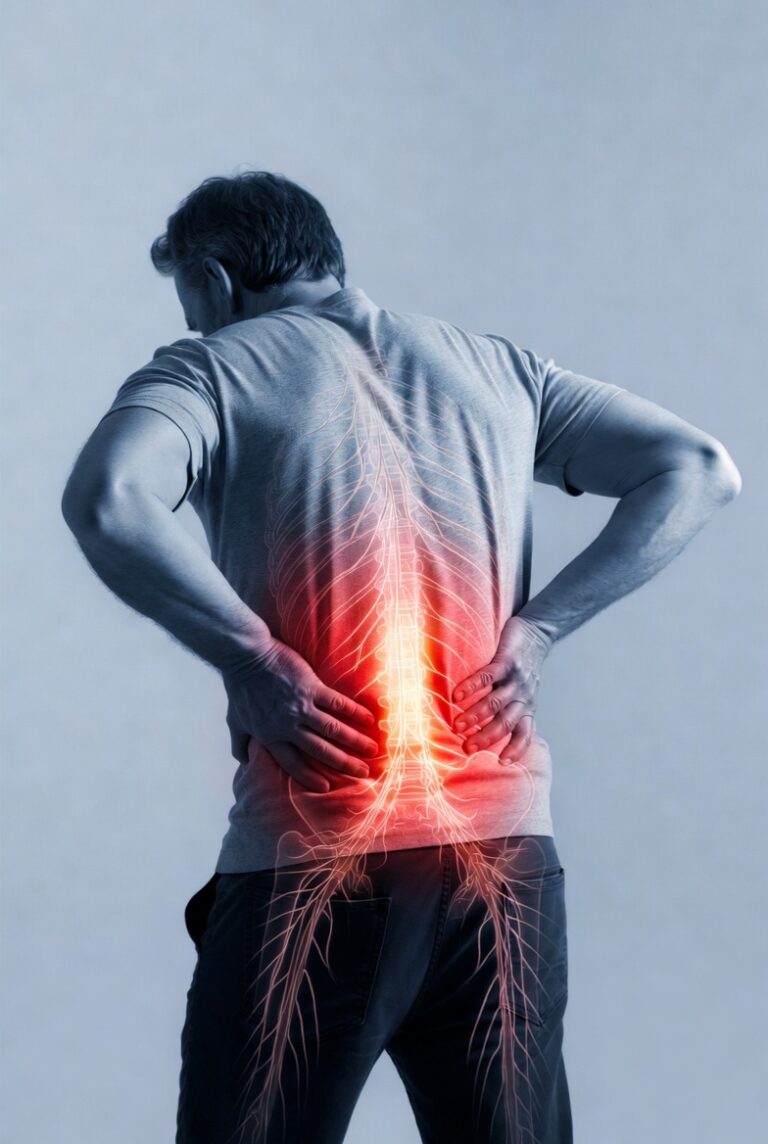
At the core of CRPS is central sensitization. The nervous system amplifies pain perception at the level of the spinal cord, thalamus and cortex. The pain threshold drops, the painful area spreads beyond the original injury, any touch feels excruciating.
The key mechanism operates in the dorsal horn of the spinal cord. After a peripheral injury, microglial cells become activated. These are the macrophages of the central nervous system, and under alarm they switch into a mode of releasing pro-inflammatory substances: interleukin-1-beta, tumor necrosis factor alpha, interleukin-6. Microglia release BDNF, a neurotrophic factor. BDNF acts on dorsal horn neurons and reduces the activity of the transporter protein KCC2, which is responsible for chloride concentration inside the cell. Chloride concentration determines whether the inhibitory transmitter GABA can do its job. When the balance shifts, inhibition weakens, and in extreme cases it changes sign. The brake didn’t break, it simply stopped being a brake. This work was published by the group led by Yves De Koninck in Nature in 2005, and it remains one of the key explanations of allodynia.
In CRPS this mechanism works with particular cruelty. Patients are afraid to move, because movement intensifies the suffering. Muscles atrophy, joints stiffen, the skin changes color and temperature, and the cycle deepens.
Four directions of work
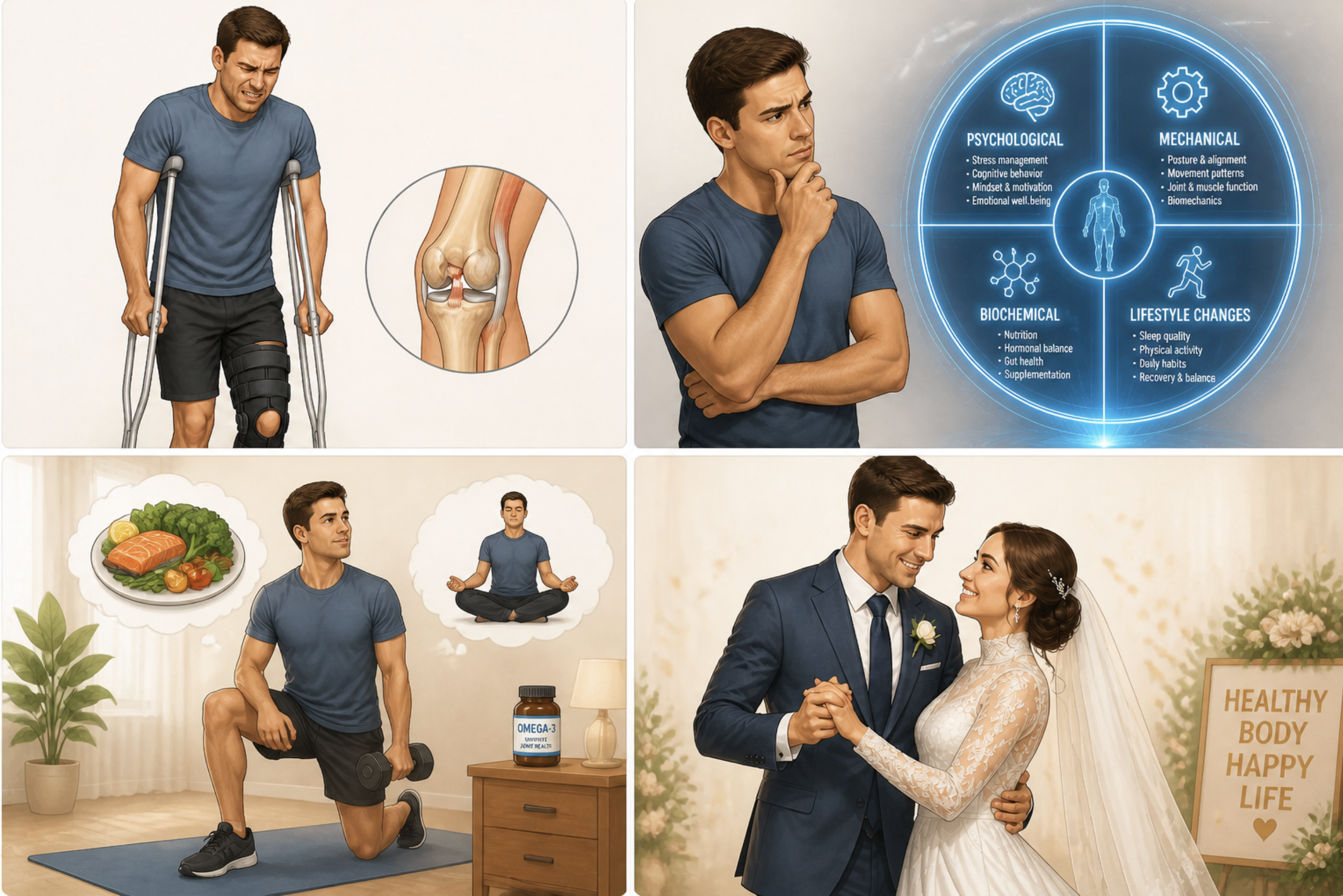
CRPS is a multifactorial condition. And the treatment must be multifactorial. In my practice I distinguish four directions, and the order here is not a hierarchy of importance, just convenient navigation.
Mechanical: restoring movement
Any persistent source of irritation from the periphery keeps the dorsal horn of the spinal cord in a state of heightened readiness. An immobile joint, an atrophied muscle, impaired proprioception, all of this feeds central sensitization.
But CRPS has a special trap: movement hurts. And fear of movement (kinesiophobia) is often stronger than the pain itself. The work of Louis Gifford and later Lorimer Moseley showed that explaining the mechanism of pain, demystifying it, reduces anxiety and makes it possible to start moving. Physiotherapy must be gentle, graded, predictable. Not “violence against the body,” but gradual retraining of the nervous system: movement is safe.
A contracting muscle releases interleukin-6, which in this context behaves as an anti-inflammatory signal. The work of Bente Pedersen showed that movement is not “burning calories,” it is an endocrine event with an anti-inflammatory effect. Slow stretching, according to Helene Langevin, reduces the volume of the inflammatory focus and speeds up its resolution.
Biochemical: inflammation and neurochemistry
In CRPS, inflammation operates on several levels at once. Local inflammation in the tissues: the release of substances from damaged cells (bradykinin, prostaglandins, substance P) activates primary nociceptors. Neurogenic inflammation: the nerve endings themselves release pro-inflammatory peptides, amplifying the local inflammatory response. Systemic inflammation: activation of the immune system as a whole, changes in microcirculation.
There is no universal recipe. Sometimes specific medications aimed at neuropathic pain help. Sometimes local nerve blocks, especially with a clear vasomotor component. Sometimes work on microcirculation, vitamin C (Zollinger’s 2007 meta-analysis showed a reduced incidence of CRPS after wrist fractures with vitamin C). Sometimes calcitonin, bisphosphonates for bone pain.
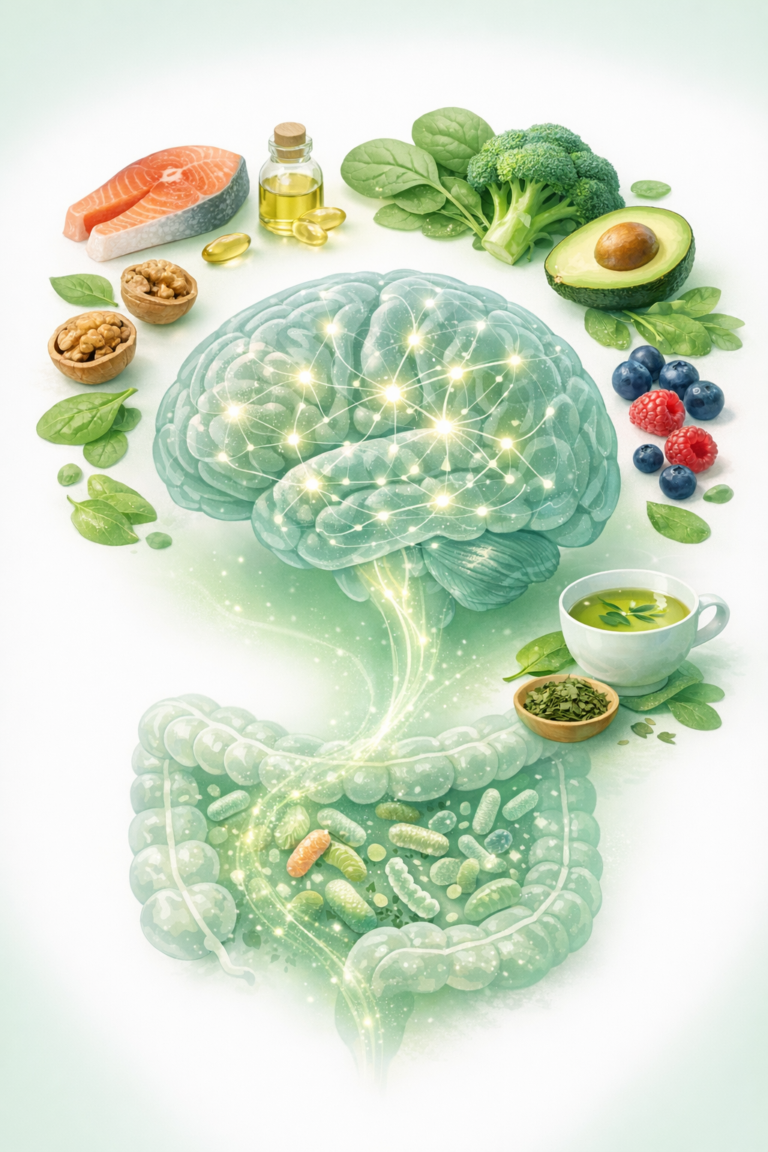
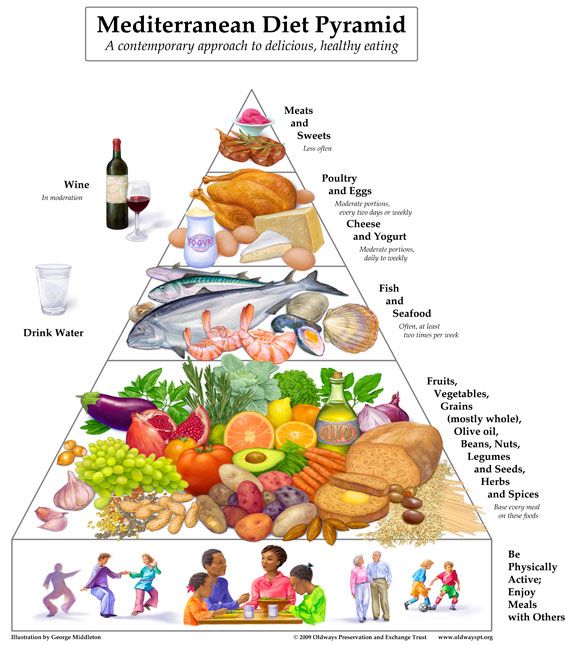
But the most important and most reliable thing is shifting the body as a whole from a pro-inflammatory to an anti-inflammatory mode. This is achieved through an anti-inflammatory nutrition protocol, correction of biochemical and neurotransmitter balance, and stimulation of the biome, the friendly bacterial environment of the gut. Omega-3 fatty acids are the raw material for the molecules that give the command to “stop the inflammation.” Dietary fiber supports the butyrate-producing bacteria that feed the cells of the gut lining and lower systemic inflammation. Vitamin D, magnesium, iron, B12: deficiencies in people with chronic pain are found regularly.
Psychological: fear, anxiety and catastrophizing
When the brain interprets pain as a threat to life, it amplifies it. This does not mean the pain is “made up.” It means the brain is part of the body, and it needs treatment too.
Pain catastrophizing is a cognitive pattern in which the patient perceives pain as something terrible, uncontrollable and never-ending. The work of Sullivan and colleagues showed that catastrophizing does not merely accompany pain, it amplifies it through activation of the hypothalamic-pituitary-adrenal axis and elevated inflammatory markers.
Cognitive behavioral therapy, hypnosis, mindfulness techniques, work on fear of movement, all of this lowers the intensity of the pain signal. Breathing with a prolonged exhale raises vagal tone. In 2002 Kevin Tracey described the cholinergic anti-inflammatory pathway: a signal along the vagus nerve, via alpha-7 nicotinic receptors, directly reduces the production of tumor necrosis factor by macrophages. This is not esoterica, this is anatomy.
Lifestyle: sleep, dreams, social connections
When a person has lived around pain for six years, everything else disappears. Returning to life is part of the therapy.
Sleep. Michael Irwin’s meta-analysis showed a consistent link between sleep disturbance and elevated inflammatory markers, including interleukin-6 and C-reactive protein. According to Maiken Nedergaard (Science, 2013), during sleep the intercellular space of the brain expands and the clearance of metabolic waste accelerates sharply. The brain washes itself at night.
A dream. Having a strong, emotionally meaningful dream provides sustained motivation for treatment and recovery.
Social connections and meaning. Isolation raises inflammatory markers. The work of Naomi Eisenberger showed that social pain activates the same neural networks as physical pain. A person who for six years has not believed he will ever dance at a wedding needs not only treatment but a vision of the future.
“I believe you” is the first medicine
That young man who came to me yesterday left with hope not because I gave him a magic pill, but because for the first time in six years someone looked him in the eye and said: “I see your pain. It is real. And we will work it out.”
Key principle
Believing the patient is not sentimentality. It is a clinical necessity. Therapeutic alliance, trust and support reduce the activity of pain centers in the brain. When the patient relaxes, when he stops fighting the system and begins cooperating with his body, everything changes.
There is hope
CRPS is not a life sentence. The earlier comprehensive treatment begins, the higher the chances of full recovery. Even in a chronic course, 6, 10, 15 years, there are paths to improvement.
The main thing is to understand: CRPS is not cured by a single pill and is not cured by psychology alone. It takes a team: a doctor who sees the whole picture, a physiotherapist, a psychologist, a dietitian, and, most importantly, a patient who is ready to return to life.
My patient asked: “Doctor, how can I thank you for the hope and the support?” I understood that words about professional duty were not what he wanted to hear right now. “Thank me with an invitation to your wedding. I want to see with my own eyes how you dance your first dance with your bride.”