Low FODMAP Diet: When “Healthy Food” Causes Pain
Sometimes it happens: a person switches to healthy eating, consumes lots of vegetables, fruits, and legumes, but instead of feeling light, they experience bloating, cramps, and irregular bowel movements. In medicine, this is often associated with SIBO (small intestinal bacterial overgrowth) or IBS (irritable bowel syndrome).
For such cases, we have the Low FODMAP protocol.
 What is FODMAP?
It is an acronym that groups together short-chain carbohydrates that are poorly absorbed in the small intestine:
Fermentable
Oligosaccharides (garlic, onion, wheat, legumes)
Disaccharides (lactose/dairy)
Monosaccharides (excess fructose, honey, apples)
And
Polyols (sweeteners, mushrooms, stone fruits)
 How does it work?
These carbohydrates have high osmotic activity (drawing water into the intestinal lumen) and are rapidly fermented by bacteria. The result is stretching of the intestinal walls by gas and water, which in patients with visceral hypersensitivity causes sharp or aching pain.
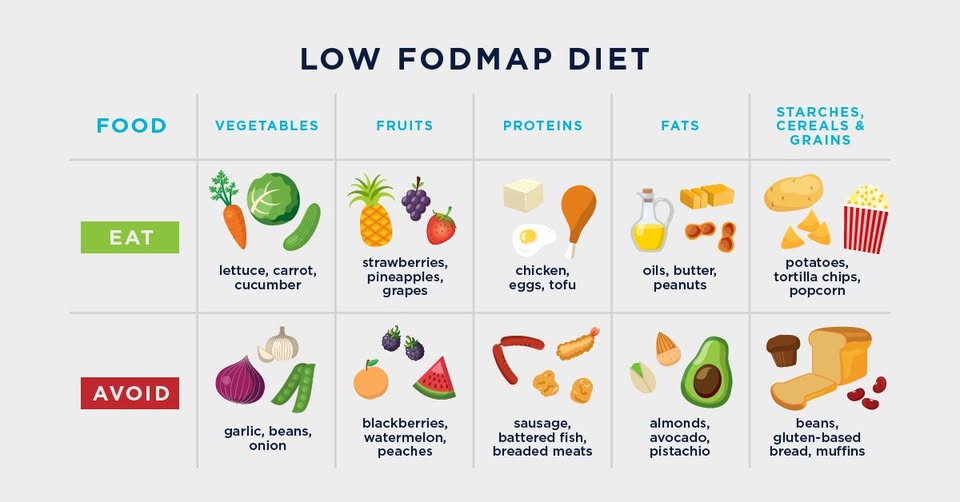
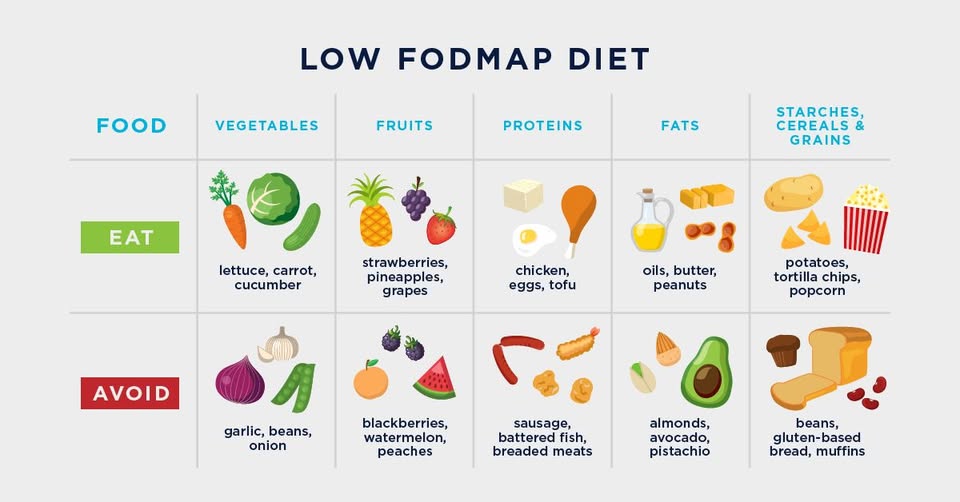
 What WE EAT (Low FODMAP – safe):
Vegetables: Cucumbers, zucchini, carrots, spinach, eggplants, bell peppers.
Fruits: Kiwi, strawberries, blueberries, citrus fruits, pineapple.
Protein: Any meat, fish, eggs, hard aged cheeses (parmesan).
Grains: Quinoa, rice, buckwheat, oats.
Milk: Lactose-free options.
 What WE EXCLUDE (High FODMAP – triggers):
Vegetables: Onion, garlic (even in seasonings!), asparagus, artichokes, cauliflower.
Fruits: Apples, pears, watermelon, peaches, dried fruits.
Legumes: Chickpeas, lentils, beans (especially important for the Israeli diet).
Sweeteners: Sorbitol, xylitol (often found in “healthy” bars and chewing gums).
 The “3-step” strategy
FODMAP is not a lifelong diet. It is a temporary test:
Elimination (2–6 weeks): Strict restriction of all High-FODMAP foods until symptoms disappear.
Reintroduction (Testing): We introduce one product from each group to understand exactly what the gut reacts to (for example, fructose or lactose).
Personalization: Creating a diet that is as broad as possible but excludes your personal triggers.
The gut and brain are directly connected. In people with chronic pain, abdominal bloating increases overall anxiety and lowers the pain threshold. By eliminating “fermentation” in the gut, we often see significant improvement in the overall psycho-emotional state.